The special education program at Fountain Hills High School has made some changes this year that have some parents in the community concerned, but Superintendent Kelly Glass said she is confident that the Fountain Hills Unified School District is doing everything it can to provide their student with the education they deserve.
The biggest change to the program, and seemingly the source of much of the concern for parents, is the use of instruction time to teach students the state standards instead of focusing solely on life skills, as in years past.
“The changes that were made were based on the fact that we were not teaching the students the standards,” Glass said. “So that was added into the instructional day for the life skills program.”
You must be a member to read this story.
Join our family of readers starting at $5 for your first month and support local, unbiased journalism.
Click here to see your options for becoming a subscriber.
Register to comment
Click here create a free account for posting comments.
Note that free accounts do not include access to premium content on this site.
I am anchor
Changes made to FHHS special education program
FHHS Garden 2.JPG
Posted
Joey Postiglione, Reporter
The special education program at Fountain Hills High School has made some changes this year that have some parents in the community concerned, but Superintendent Kelly Glass said she is confident that the Fountain Hills Unified School District is doing everything it can to provide their student with the education they deserve.
The biggest change to the program, and seemingly the source of much of the concern for parents, is the use of instruction time to teach students the state standards instead of focusing solely on life skills, as in years past.
“The changes that were made were based on the fact that we were not teaching the students the standards,” Glass said. “So that was added into the instructional day for the life skills program.”
Glass explained that life skills is a component of transition skills, and FHHS is required to have transition skills built into a student’s Individualized Education Program (IEP) once they turn 16. But according to Glass, life/transition skills are not supposed to be the entirety of a student’s education within the special education program.
“So, the idea that this was just simply a life skills program is incorrect,” Glass continued. “We should have been and are now teaching the standards as appropriate to the student’s level, as well as providing transition services, which looks different for every student. It can include life skills, it can include job-related skills, and it can include communication-type skills.”
With the arrival of the COVID-19 pandemic, however, it has become tougher for the school to teach students these transition skills, many of which require close contact or even activities outside of the classroom.
“It’s not that we don’t want to have life skills for kids, it’s just that, right now, there are some things that we cannot do,” Glass said. “We still don’t have field trips for anyone; we still are not doing any type of mentoring. So it does look very different right now and it will probably continue to look very different, as we have seen a doubling in our percent of positivity for COVID-19.”
While the high school recently closed for two weeks due to COVID-19 exposure, the site is currently operating on a hybrid schedule, further complicating the process of educating local students.
Glass said the school has tried to find different ways of teaching more tactile lessons within the special education program, but they can only go so far.
“We have to make sure that all the surfaces, all of the items that our students are using, are being properly sanitized and, if they can not be properly sanitized, we are currently not using them,” she continued. “That goes for food. A lot of our students have different types of food preparation as goals in their IEPs for self-sufficiency, but right now we can watch videos about it [and] we can talk about it, but our kids and our teachers cannot and should not be prepping food.”
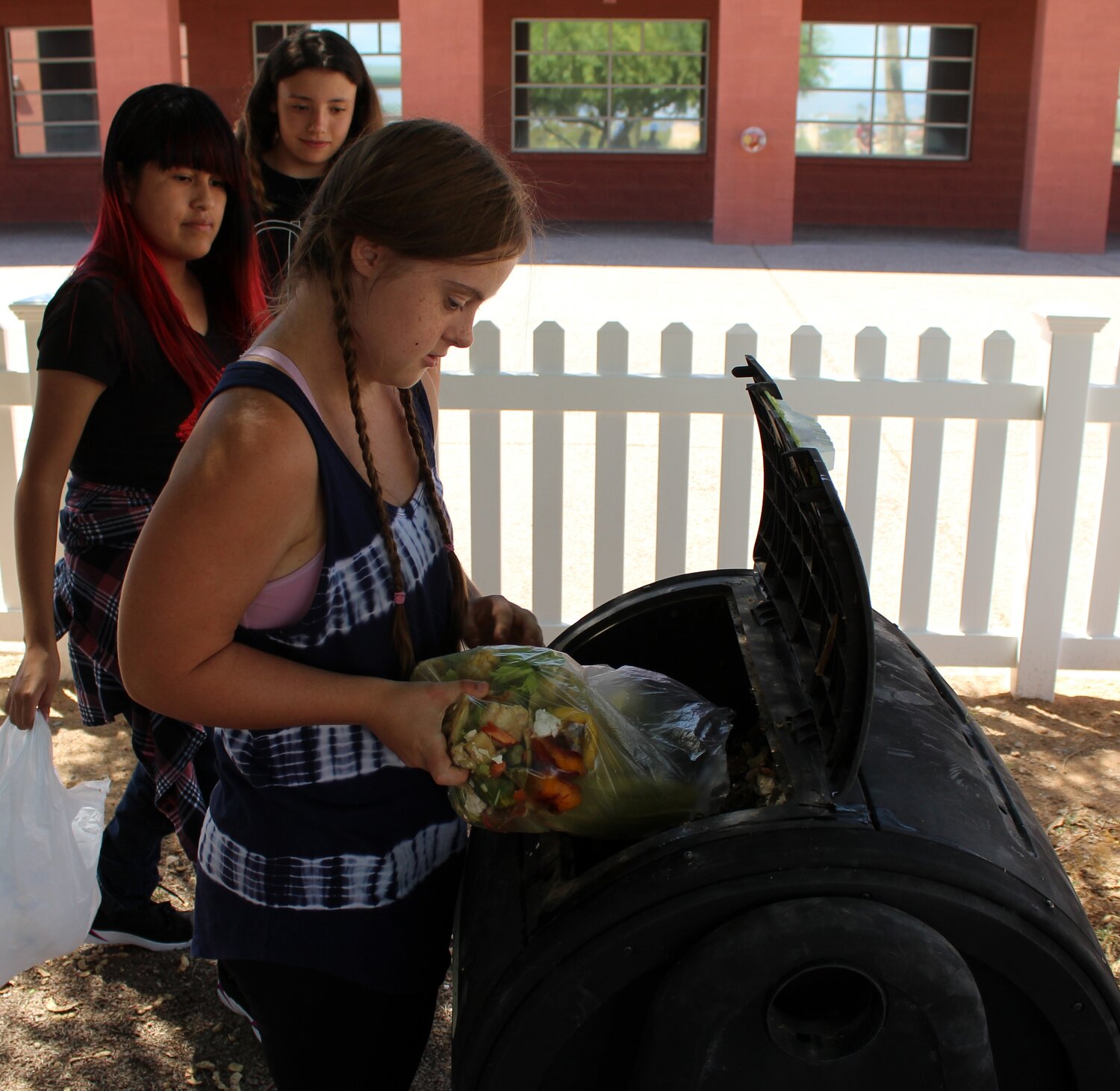
Glass said that activities like working in the high school garden or selling shirts around town will come back and be a part of the special education curriculum when they are able to safely resume them.



Comments
No comments on this item Please log in to comment by clicking here