By the end of this month, a new faith-based non-profit organization dedicated to providing freedom to low-income, permanently disabled individuals should be operating in the community.
Servants at Work (SAWs) has leased a suite on Laser Drive near Extended Hands Food Bank where volunteers will build ramps for individuals using wheelchairs, scooters or walkers, but unable to afford one on their own.
SAWs is a ministry of the United Methodist Church, said David James, conference coordinator, Desert Southwest Conference.
You must be a member to read this story.
Join our family of readers starting at $5 for your first month and support local, unbiased journalism.
Click here to see your options for becoming a subscriber.
Register to comment
Click here create a free account for posting comments.
Note that free accounts do not include access to premium content on this site.
I am anchor
Ramping up homes for accessibility
SAWS.jpg
Posted
Barb Charzuk, Reporter
By the end of this month, a new faith-based non-profit organization dedicated to providing freedom to low-income, permanently disabled individuals should be operating in the community.
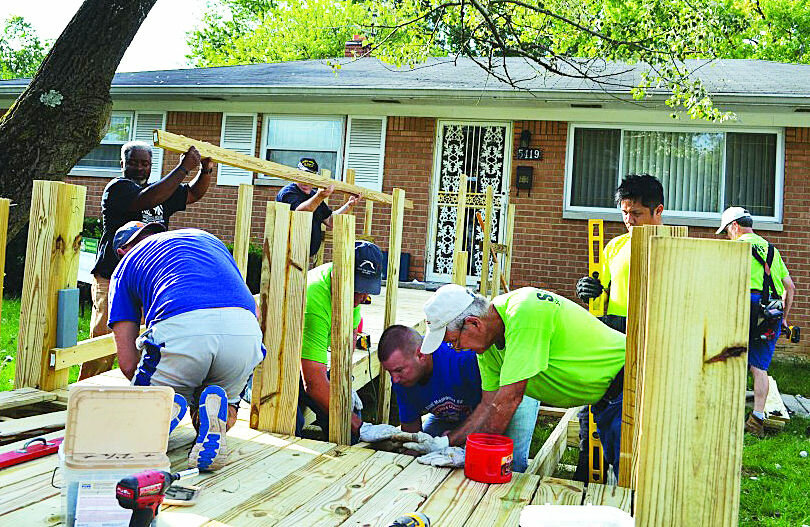
Servants at Work (SAWs) has leased a suite on Laser Drive near Extended Hands Food Bank where volunteers will build ramps for individuals using wheelchairs, scooters or walkers, but unable to afford one on their own.
SAWs is a ministry of the United Methodist Church, said David James, conference coordinator, Desert Southwest Conference.
The Southwest operation involves 130 churches in Arizona and southern Nevada and is an affiliate of the group that originated in Indiana.
James said overcoming activity impediments allows individuals to “age in place” and remain in their homes.
The ramps provide them with access to their neighborhoods and communities.
The 2010 U.S. Census reported that 3.3 million people 15 and older use a wheelchair. The statistic is expected to be higher now.
Individuals whose annual income is less than 200 percent of the federal poverty line may qualify for a ramp. SAWs will accept whatever personal contribution a recipient can make to help provide a ramp for the next person in need.
Ramps are computer-aided designed and comply with Americans with Disabilities Act regulations.
Most ramps, made from pressure-treated lumber, can be completed in four to six hours. The ramps are customized to fit the available space. When no longer needed, they can be removed and reused.
The immediate objective for the local team is to find eligible clients, organize volunteers and secure sustainable finances from donations and grants, said James.
The goal is to construct 100 ramps within the first year, he said. He is reaching out to faith-based groups to participate in the community project.
Interested volunteers and individuals requesting a ramp can contact James at 480-800-9950 or azdlj412@gmail.com.



Comments
No comments on this item Please log in to comment by clicking here